
Registrations for the 2026 IDA Conference are now open.

The Malleefowl, also known as Nganamara, are a culturally significant and threatened species that live on mallee and mulga country in the Southern Deserts. Malleefowl populations have decreased significantly since colonisation, and are listed as vulnerable due to land clearing and continue to be threatened by inappropriate fire regimes and feral predators like foxes and cats.
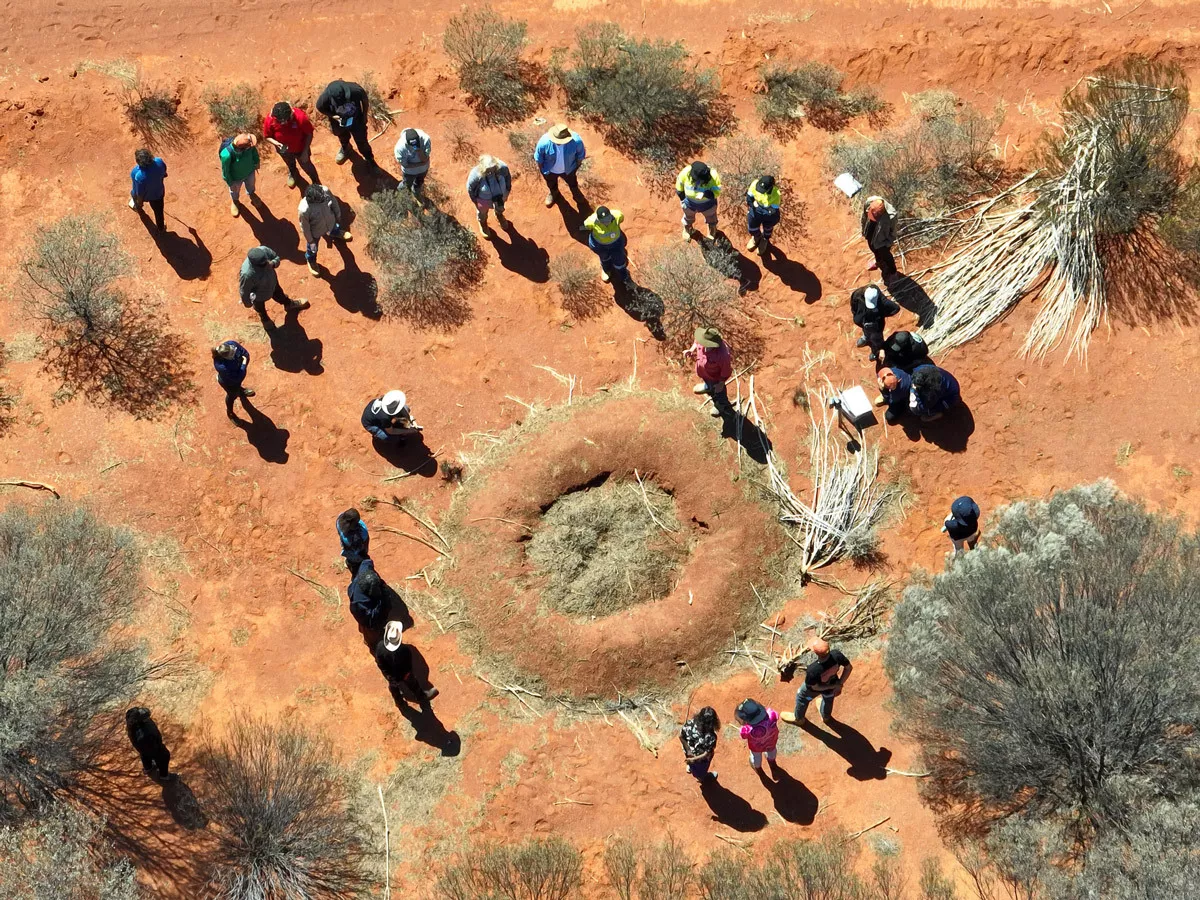 Rangers practice recording information about a Malleefowl mound using the monitoring app at Morapoi Station
“I think education is really important, so we can get the Malleefowl numbers back up again. Yeah. I don’t think there’s enough public awareness on Malleefowls and what they are and how important they are to, you know, Indigenous people, to the ecosystem as well.”
Malleefowl are one of three species of mound-building birds in Australia, known as megapodes. Their mounds can be large, reaching over a metre in height and four metres wide. Unlike most other birds who incubate their eggs by sitting on them, Malleefowl use their mounds. The male buries wet leaf litter in the mound, which heats up as it rots and creates a natural incubator. Weighing up to 2.5kg, they are roughly the size of a domestic chicken. They have grey heads and cream to white breasts, with mottled feathers of grey, cream and rufous, making them well-camouflaged.
Despite being shy and rarely seen, Malleefowl have distinctive tracks with a three-toed print, usually 10-12cm long, placing their feet directly in front of the other as they walk.
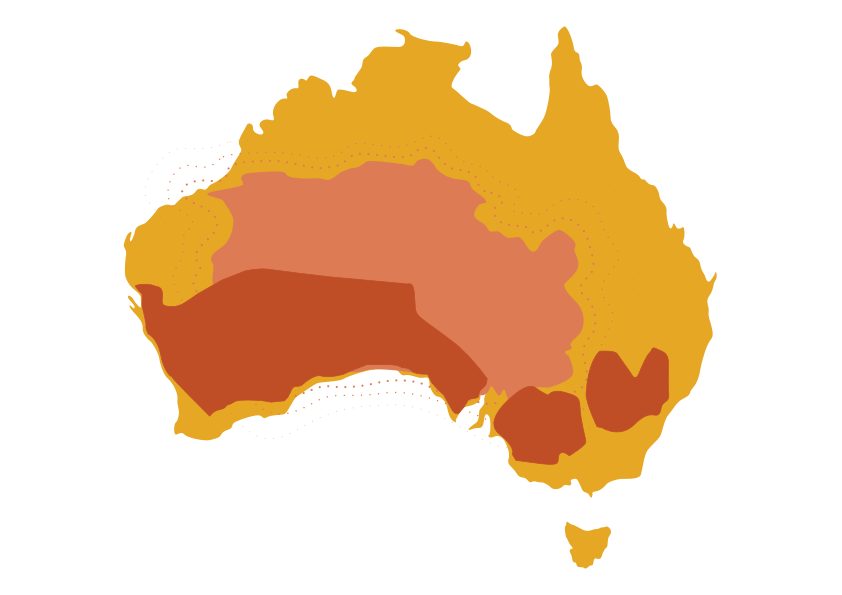
The IDA is supporting ranger teams to record cultural knowledge, conduct surveys, establish monitoring programs and manage fire and cats around Malleefowl sites.
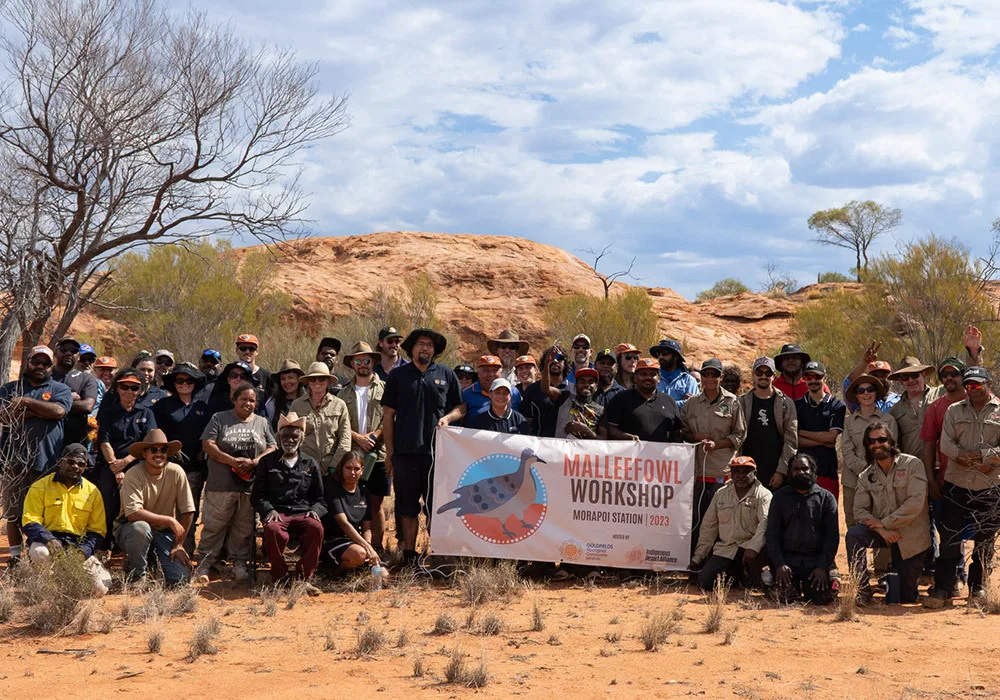 Ranger Teams together at the 2023 Malleefowl Workshop on Morapoi Station
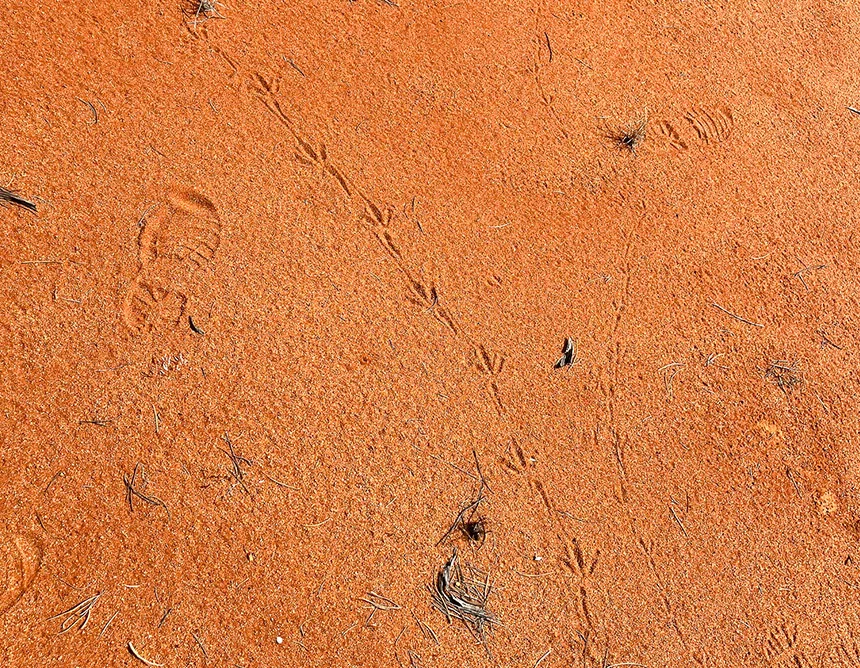 Fresh Malleefowl tracks
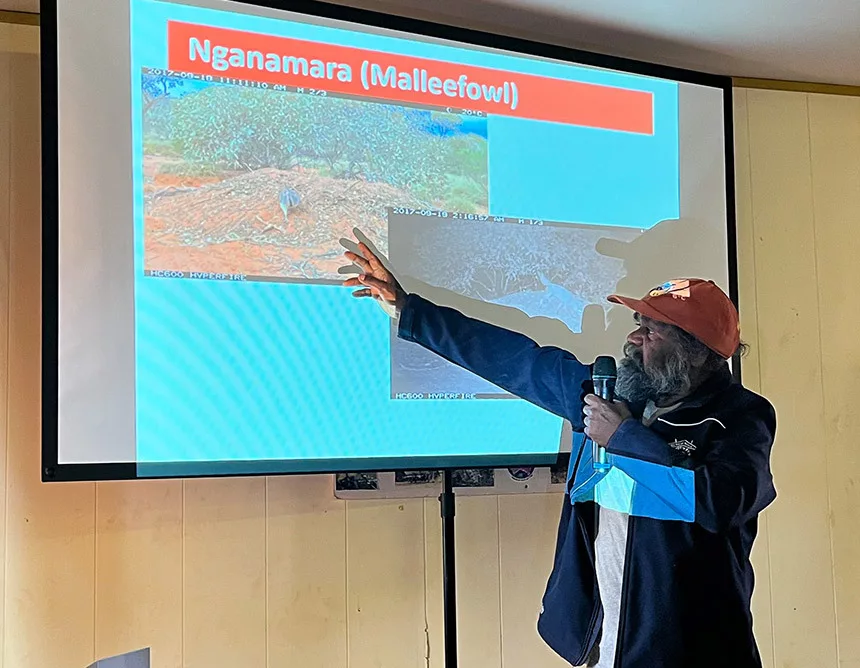 Lance Ingomar, Oak Valley Ranger, talks about Ngaṉamara on Maralinga Tjarutja Country.

Warning: Aboriginal and/or Torres Strait Islander peoples should be aware that this website may contain images, voices and names of people who have passed away which may cause sadness or distress.