
Registrations for the 2026 IDA Conference are now open.

Night parrot are an important part of tjukurrpa and so are culturally significant to Indigenous people across Australia. Threatened by feral cat predation and habitat loss by wildfire, night parrots are listed as critically endangered.
 Participants on the study tour of Pullen Pullen listen out for Night parrot song at dusk.
“It's better working together because we can all let other rangers know... and share tips and advice to protect country and protect the Night Parrot."
Night parrots are relatively small, growing up to 25cm long. Their feathers are bright green mottled with black along its back, wings and tail, and bright yellow on the belly. They make their roosts in old-growth spinifex, resting during the day out of sight, and coming out at night to forage.
The night parrot are elusive, but have distinctive calls which help to identify them on country.
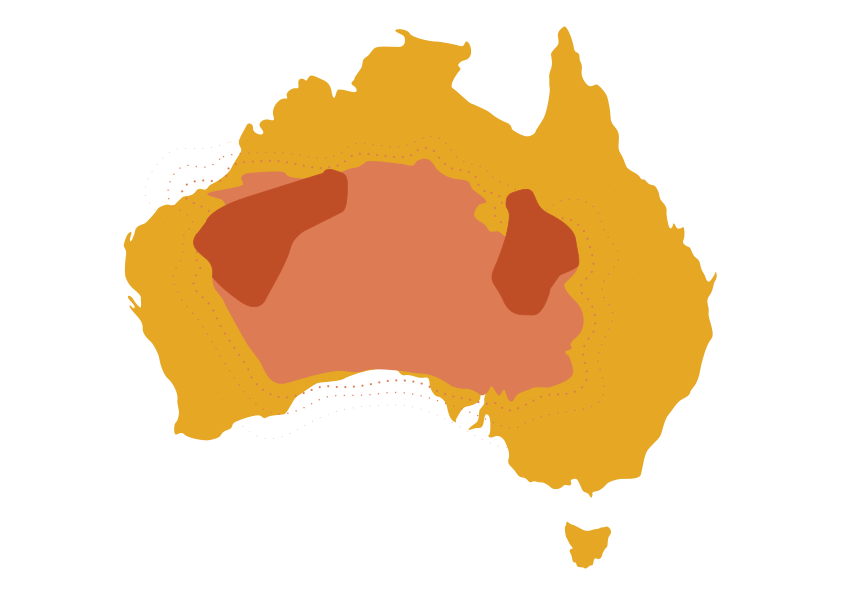
Rangers across the desert look after night parrot populations with right-way desert fire and predator management around night parrot habitat. The IDA facilitates research partnerships with NESP Resilient Landscapes Hub to assist ranger teams in establishing long term monitoring programs, facilitate DNA analysis of night parrot scats from roosting sites to examine diet and population structure, and GPS tracking to determine feeding habitats and drinking sites. The IDA have also facilitated a number of exchanges between member groups to promote knowledge sharing.
 KJ Martu rangers installing sound recorders in Night Parrot habitat
 A Night parrot nest within spinifex hummocks on Pullen Pullen
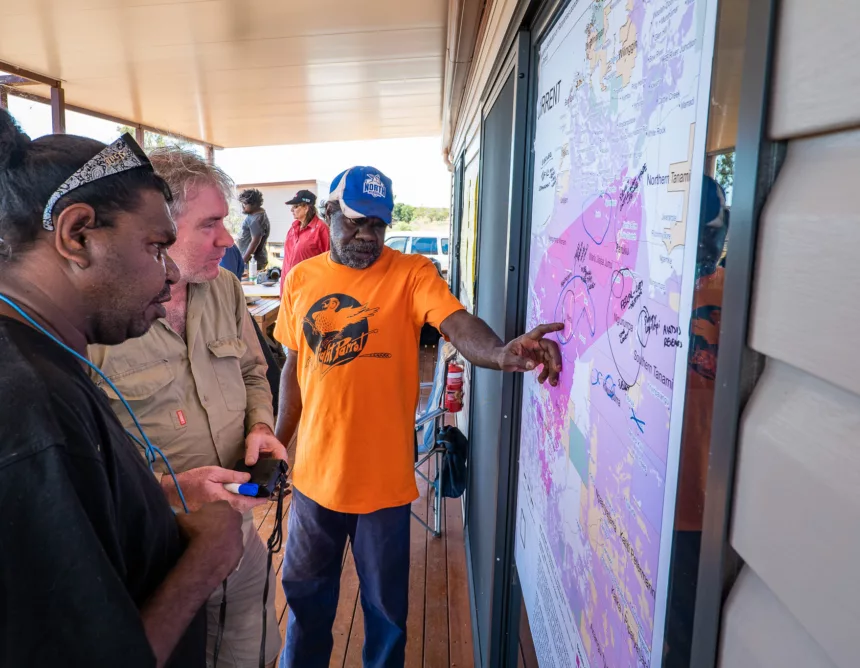 A conservation planning workshop was held on the study tour at Pullen Pullen, to inform future Night Parrot surveys, management and research

Warning: Aboriginal and/or Torres Strait Islander peoples should be aware that this website may contain images, voices and names of people who have passed away which may cause sadness or distress.