FOUNDATION PROJECTS
Registrations for the 2026 IDA Conference are now open.

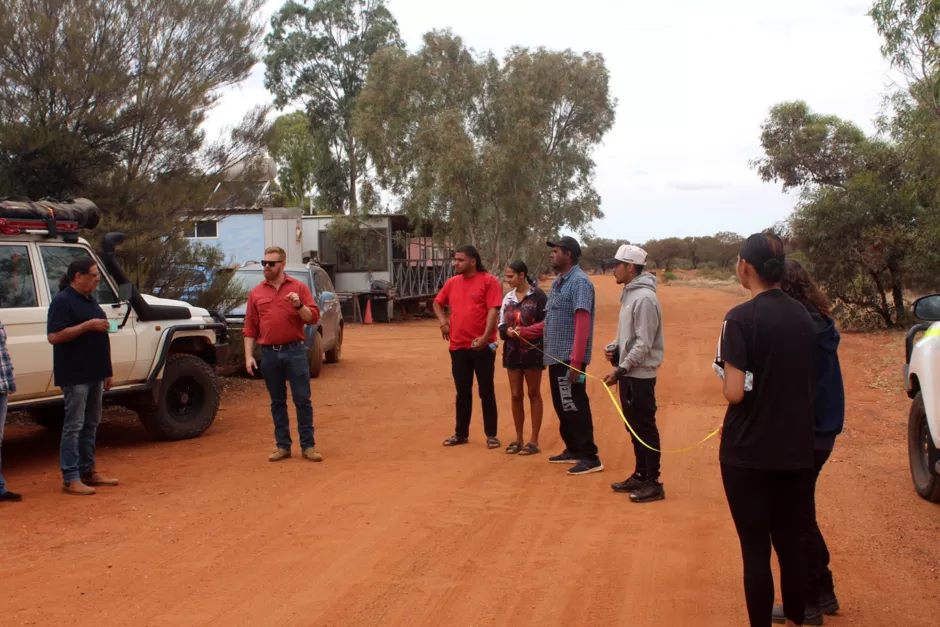
In September 2024, Barra Parrapi Aboriginal Corporation launched its first-ever ranger program, beginning with a workshop at Morapoi Station that brought together 19 participants, including 12 Traditional Owners. The workshop was comprehensive and far-reaching in scope, covering right way and wrong way fire, climate change, colonial history, even the majestic nests of the Malleefowl—which can be over a metre in height and four metres across! Participants learned about ranger roles and why contemporary land management is important. This meeting was a key step in developing a ranger team to manage and protect Nangaanya-ku country, 40,700 square kilometres of land and waters in the Great Victorian Desert of Western Australia.
September 2024
Morapoi Station
Western Australia
Barra Parrapi Aboriginal Corporation, Desert Support Services, Remote Development Services
"I’d like to be doing what rangers are doing. It’d be good to do training, something new, to be on the land …" – Quaddyn Barron
"It’s great to see young people involved [in the workshop] and understanding bush food and bush ways." – Owen Tucker
The Barra Parrapi native title area consists of salt lakes, sand plains, mulga, rocky outcrops and escarpments.
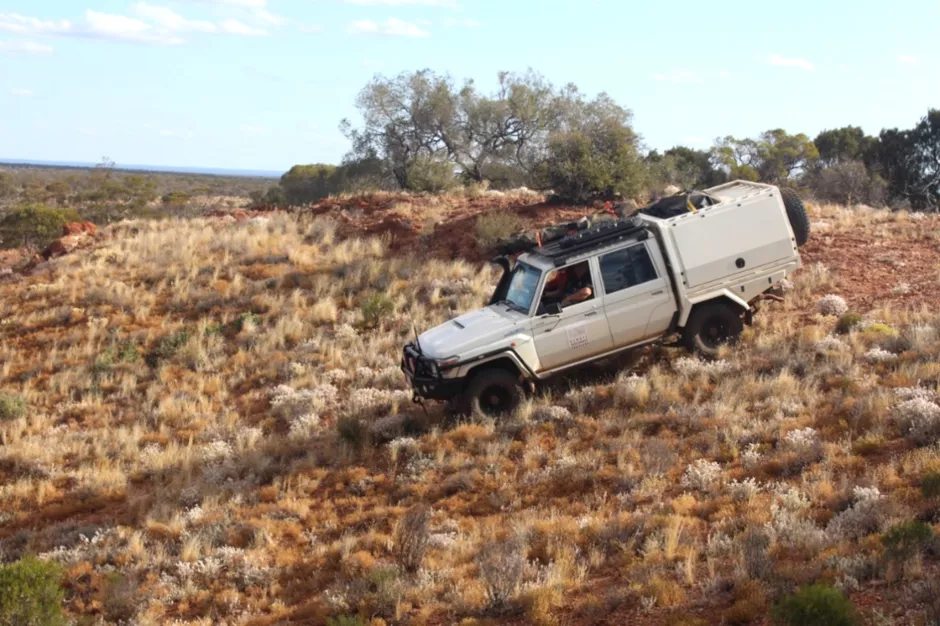
Participants were encouraged to pack a head torch, walking shoes and snacks, then get ready for a bus pick up from Kalgoorlie, Laverton or Leonora, to transport them out to the Morapoi Station for the two days of workshops. Greg Stubbs, the station owner and Chairperson of Barra Parrapi Aboriginal Corporation, welcomed everyone, then the planning began.
Throughout the workshops, different management opportunities were considered, particularly in the context of activities like pastoralism and mining. Caring for country was identified as a priority.
Without the involvement of Indigenous communities and ranger groups, challenges like these remain unaddressed and unregulated. Participants discussed how Indigenous-led land management can restore balance, safeguard wildlife, and ensure that cultural values are protected. They also stressed the important role of elders in educating the younger generation.
"Our goal is to rehabilitate this country"
– Troy O’Donahue
A key focus of the workshops was exploring the work of other desert ranger groups and the support systems that contribute to their success. Participants gained insight into the network of over 60 desert ranger groups across Australia—a network that is coordinated by the Indigenous Desert Alliance. These groups work on projects specific to their traditional lands while also contributing to larger landscape-scale conservation efforts. This collaborative approach is boosting the Indigenous land management sector, helping to build climate resilience, and fostering a powerful sense of unity.
Considering the scale of desert ranger work, participants felt motivated. Shelley O’Donahue from Karratha shared that she hadn’t known much about the work of rangers, but that now, "I’d be interested to learn more about ranger training."
workshop participants, including Traditional Owners
workshops
on country trips
Initiating a desert ranger program requires strong leadership, clear vision and great partners. Barra Parrapi Aboriginal Corporation has all three! Further land management planning including more workshops and on country trips will take place in the months ahead.
Barra Parrapi Aboriginal Corporation would like to thank the WA Department of Biodiversity, Conservation and Attractions, Desert Support Services, Central Desert Native Title Services, Indigenous Desert Alliance and Morapoi Station.
You, too, can invest in the future by lending support to desert ranger programs.
Reach out to foundation@indigenousdesertalliance.com to learn more.

Warning: Aboriginal and/or Torres Strait Islander peoples should be aware that this website may contain images, voices and names of people who have passed away which may cause sadness or distress.