Sharing knowledge on warru
3 minute read

Registrations for the 2026 IDA Conference are now open.
3 minute read
Warru (Black-footed Rock-wallaby) are culturally significant to many desert mob, and are considered one of South Australia's most threatened mammals, with feral cats and foxes putting the population at risk.
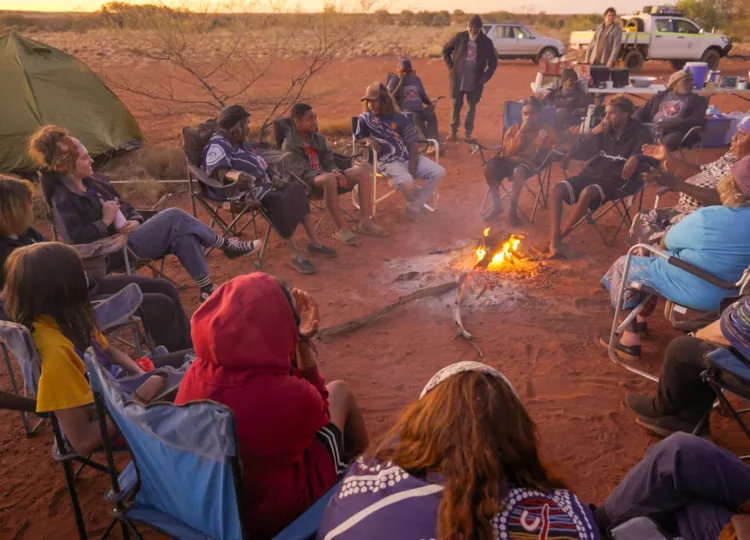
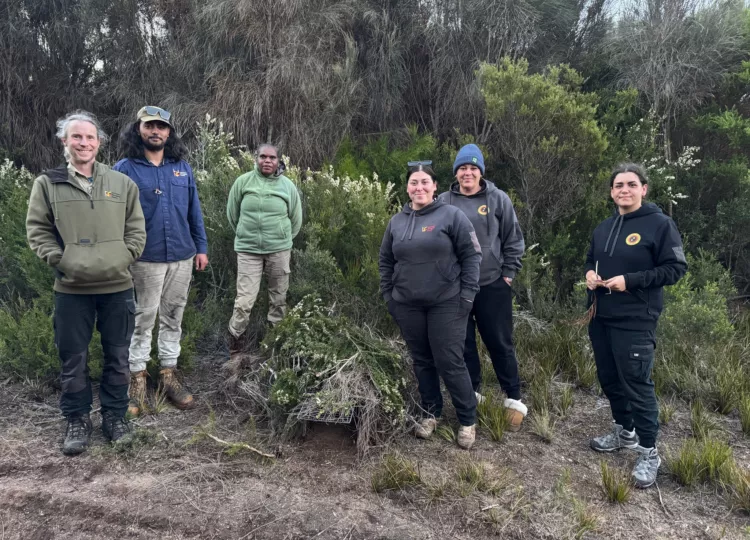
APY Lands are now seeing an increase in Warru populations thanks to a conservation program APY Rangers are working hard on. Nyangumarta Rangers recently rediscovered Warru on their country, so in August, they travelled from the ranger base in Bidyadanga to APY Lands in New Well, to learn more about looking after Warru.

"It was a good trip, we loved going on to APY Lands. We went there to see black-footed wallaby."

Rangers carried out trapping at five different sites, where APY Rangers shared their knowledge on taking Warru from the traps, and how to keep them and their joeys safe while processing and releasing them.
"We got to hold the wallaby which were trapped out there, and let them go."
 L-R Ronald Yanawana, Vernon Bellou and Emma Randle processing a warru.
They also checked out the Pintji - the 100-hectare fenced enclosure where Warru are able to breed without predators around. The Warru living in the Pintji are used as a source population for releasing them at new sites across APY Lands and beyond.
 Nyangumarta ranger Roberta Hunter helping process a warru.
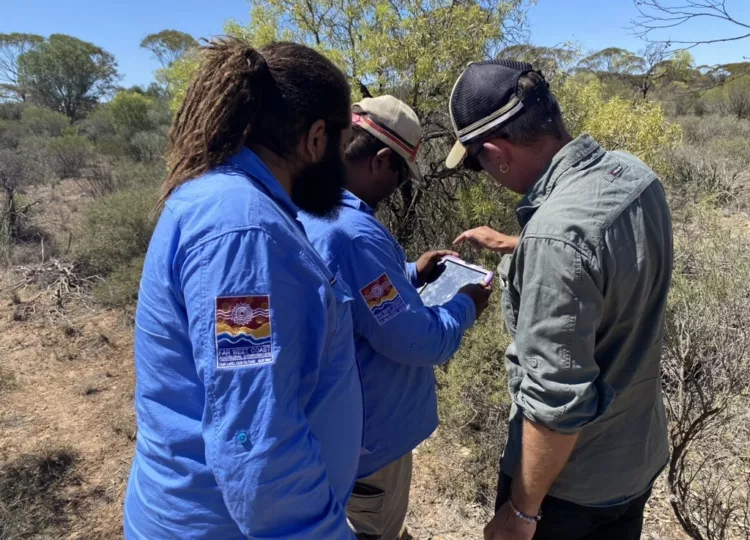
APY Rangers shared their knowledge on using Warru scat to measure population size and find what they like to eat, which helps them to choose the right habitat for Warru that are released from the Pintji. They also talked about their experience using Felixer traps, and the thermal drones they've started using as a new way to look for Warru.

Nyangumarta Rangers are bringing this knowledge back to their country to search for more Warru, and look after the ones they have already found.
 Read
Story
Read
Story
 Read
Story
Read
Story
 Read
Story
Read
Story
 Read
Story
Read
Story
 Read
Story
Read
Story
 Read
Story
Read
Story
 Read
Story
Read
Story
 Read
Story
Read
Story
 Read
Story
Read
Story
 Read
Story
Read
Story
 Read
Story
Read
Story
 Read
Story
Read
Story
 Read
Story
Read
Story
 Read
Story
Read
Story
 Read
Story
Read
Story
 Read
Story
Read
Story
 Read
Story
Read
Story
 Read
Story
Read
Story
 Read
Story
Read
Story
 Read
Story
Read
Story

Warning: Aboriginal and/or Torres Strait Islander peoples should be aware that this website may contain images, voices and names of people who have passed away which may cause sadness or distress.